H\s H A M I L T O N S T O N E E D I T I O N S
p.o. box 43 Maplewood, NJ 07040
Authors Catalog Hamilton Stone Review Home Order Contact Us Submissions Irene Weinberger Books
Carole Rosenthal Web Page Lynda Schor Page News About Hamilton Stone Editions and More
A few of our writers: Roger Mitchell, Jane Lazarre, Kelly Watt, Miguel Ortiz, Dorian Gossy
Our Authors
James Cervantes
Naomi Feigelson Chase
Shelley Ettinger
Dorian Gossy
Rebecca Kavaler
Eva Kollisch
Edith Konecky
Jane Lazarre
Nathan Leslie
Roger Mitchell
Miguel A. Ortiz
Carole Rosenthal
Harriet Rzetelny
Lynda Schor
Leora Skolkin-Smith
Kelly Watt
Meredith Sue Willis.
.
.
.
Thanks to the pandemic, James Cervantes finds himself repatriated in the U.S. after having lived mostly in Mexico for the previous fifteen years. His latest book is From Mr. Bondo’s Unshared Life, a series of closely related persona poems. Sleepwalker's Songs: New & Selected Poems, published in 2012, is comprised of 32 new poems and others selected from six previous collections. Those include Temporary Meaning, The Headlong Future, The Year Is Approaching Snow, and Changing The Subject, a dialogue in poems with Halvard Johnson. He was editor of The Salt River Review for thirteen years and is the editor of In Like Company: The Porch & Salt River Review Anthology, published by Mad Hat Press in 2015. He is also an associate editor at Nine Mile Books.
Naomi Feigelson Chase was a 2015/16 Fellow of the New York Fiction Society. Her fiction has been published in many magazines, nominated for a PUSHCART, and anthologized in Milkweed Editions, New Rivers Press, and A Wider Giving, among others. Her two non-fiction books are The Underground Revolution: Hippies, Yippies, & Others (Holt, Rinehart & Winston) and A Child Is Being Beaten, Child Abuse in America (Funk & Wagnalls). She has published eight books of poetry. See her book page.
.
.
Shelley Ettinger's Vera's Will was published by Hamilton Stone Editions in 2015. Her short fiction and
poetry have been in literary journals including Mississippi Review, Nimrod, Cream City Review, Stone Canoe and Mizna. She has been awarded residencies at the Saltonstall Foundation Arts Colony, Anderson Center for Interdisciplinary Studies and Norcroft Writing Retreat for Women, and a grant from the Money for Women/Barbara Deming Memorial Foundation. In 2016 Shelley was a featured author at the Our Lady of the Lake University Literary Festival, the OutWrite LGBT Book Festival, and the inaugural Queens Book Festival. She is a Lambda Literary Foundation Fellow.
.
.
.
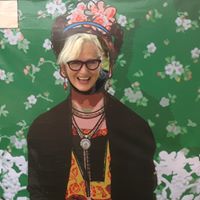
Dorian Gossy, author of Household Lies (2005) was the recipient of the 2004 First Book Award in Fiction from Winnow Press. Her fiction has appeared in over a dozen literary magazines & journals, including Daedalus, North American Review, Other Voices, Denver Quarterly, & The Sun. She has received fellowships from The Ragdale Foundation, the Indiana Arts Commission, & The Mary Anderson Center for the Arts. She holds a Master of Fine Arts degree in fiction & a Master of Social Work degree from Indiana University. She lives & works in the Adirondack Mountains of New York State.
Rebecca Kavaler a Southerner by birth, resided in New York City for more than two decades. During that time, her
short fiction won various awards, including two National Endowment of the Arts fellowships, and is available in three collections: A Little More Than Kin, Tigers in the Wood, and The Further Adventures of Brunhild. Doubting Castle, originally published by Shocken Books,was her first venture into full-length fiction. Her short stories have appeared in Antioch Review, Shenandoah, Yale Review, American Short Fiction, Carolina Quarterly, Other Voices, Mid-American Review, Perspective, Nimrod, Phoenix, Confrontation, etc. She won the AWP award in 1978 and has had stories in Best of Nimrod, and Best American Short Stories. Her poetry has been published in Prairie Schooner, Atlanta Review, (including its 10th anniversary issue) and Fantasy and Science Fiction. Rebecca Kavaler died in 2008. See article in Wikipedia.
.
Eva Kollisch was a lifelong activist for progressive political causes, women's rights, and the rights of LBGQT people, She taught German, Comparative Literature and Women's Literature at Sarah Lawrence College. She is the author of Girl in Movement, a memoir as well as her Hamilton Stone book, The Ground Under My Feet, a collection of stories and personal essays dealing with the themes of anti-Semitism, uprooting and outsiderdom. She came to the US as a Jewish refugee during World War II and was at various times in her life as a Trotskyist, anti-war protester, feminist and lesbian. She was married to the poet Naomi Replansky. Read her obituary in The New York Times here.
.
.
Edith Konecky candidly acknowledges that her insight into the lives she depicts in her novels comes from personal experience. Like her heroine, Konecky was born in Brooklyn. Like her heroines, she has a brother who is sixteen months older than she. And like both Allegra and Rachel, she is the daughter of a well-to-do dress manufacturer.
Konecky has said that Jewish custom made her a feminist before she had a word for it. She frames her work with that feminist perspective, rejecting the models of female types available to her: the baleboosteh grandmother, the mother tamed by social expectations to comply with the values of her husband. But the biographical data of her life suggest that the rejection was gradual, keeping pace with the social movements of her day. Like Allegra, she began her writing career while still in high school, winning a short story contest for which she was paid a penny a word. She enrolled at New York University when she was seventeen, married when she was twenty-one, lived a suburban life for twenty years, raising her two sons , the customary housewife/mother role, and writing occasional short stories. At the age of thirty-seven, she returned to college, this time to Columbia. She began to publish her stories, writing many of them at Yaddo, where she won fellowships from 1964 through 1969. After twenty years of marriage , she was divorced. Konecky dramatizes some of the details of her transformations in the second novel, in which the heroine, Rachel, reflects on the traumas and triumphs of her life, marriage, divorce, motherhood, grandmotherhood, her love of women, and her relationship to her work. The novelist's own work, writing, occupies a primary place in her current life. She began writing Allegra Maud Goldman at the MacDowell colony in 1972, winning frequent fellowships to work there in succeeding years. The book, in print most of the years since its first publication, was reissued by The Feminist Press in 1990 (and is still available from them) with an introduction by Tillie Olsen and an afterword by Bella Brodzki that pay tribute to the complexity and depth of Konecky's work. A Place at the Table, widely hailed critically, was recently re-issued by Hamilton Stone Editions. A collection of Konecky's short stories, Past Sorrows & Coming Attractions, was published in 2001. Her newest novel is View from the North (2004).
(Excerpted from Jewish Women in America, An Historical Encyclopedia, Routledge, 1997)
.
Jane Lazarre’s books include the memoirs, Wet Earth and Dreams: A Narrative of Grief and Recovery, Beyond
the Whiteness of Whiteness: Memoir of a White Mother of Black Sons, and The Mother Knot. Her novels include The Powers of Charlotte and Worlds Beyond My Control, among others. In 2009, Hamilton Stone Editions published her novel, Some Place Quite Unknown, and in 2011, the novel Inheritance. Chapters of Inheritance have appeared in Lilith and the on-line literary journals, Salt River Review, Persimmon Tree and Hamilton Stone Review. Recent interviews have appeared on line at Lilith’s on line website and at The Chronical of Higher Education Blog, taken from “tenuredradical.com,” a blog by Professor of American Studies, Claire Potter.
Lazarre taught writing and literature at the Eugene Lang College at the New School for many years, serving as director of the undergraduate writing program for much of that time. Her fiction and essays have been widely anthologized, taught, presented at colleges and universities and critically discussed in print and at national conferences. Among her awards and honors are the National Endowment Award in Fiction, the New York Foundation for the Arts Award in Fiction, the New School University Excellence in Teaching Award and the Myers Center Award for the Study of Human Rights in North America, for Beyond the Whiteness of Whiteness.
Her website at at http://www.janelazarre.com/.
Jane Lazarre died June 19, 2025. See her obituary in The New York Times here.
.
.
.
Nathan Leslie has published two prior collections of short fiction, most recently A Cold Glass of Milk.
Aside from being nominated for the 2002 Pushcart Prize, Leslie's stories, essays, and poetry have been published or are forthcoming in over one hundred literary magazines including North American Review, Cimarron Review, Del Sol Review, Chattahoochee Review, Sou'wester, Southern Indiana Review, Fiction International, Gulf Stream, Tulane Review, Baltimore Review, and Orchid. He is currently the fiction editor for The Pedestal Magazine and has also written book reviews and articles for newspapers such as The Washington Post, The Orange County Weekly, The Kansas City Star, The Orlando Sentinel, Rain Taxi, and many others. Leslie received his MFA from The University of Maryland in 2000 and currently teaches at NVCC/Loudoun.
See his web page at http://www.nathanleslie.com.
.
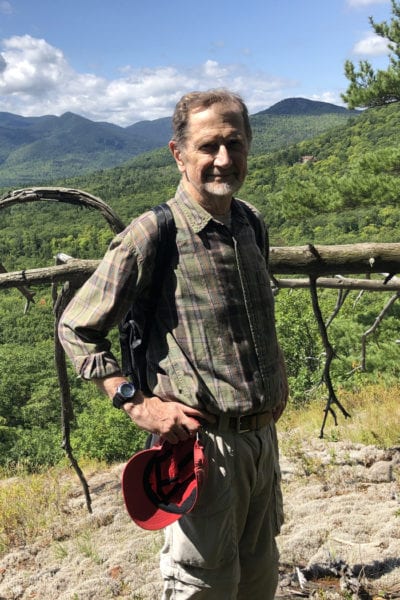
Roger Mitchell is the author of 13 books of poetry, most recently As Water Moves. His prior books of prose include Clear Pond: The Reconstruction of a Life and a collection of reviews and essays, Their Own Society: Prose on Poetry.. He spent twenty-four years teaching English and Creative Writing at Indiana University – Bloomington and now lives in Jay, New York, with his wife, the fiction writer, Dorian Gossy.
.
.
Miguel Antonio Ortiz was born in Bayamon, Puerto Rico. He grew up in the South Bronx, and graduated from the High School of Music & Art and the City College of New York. He was an editor for Hanging Loose
Press and Publications Director for Teachers & Writers Collaborative. In the business world, he worked as a computer programmer for Chase Manhattan Bank, Merrill Lynch and TIAA-CREF. Happily married for 39 years, he is the father of two sons. He currently lives in Park Slope, Brooklyn.
Some words about his novel King of Swords: “It is not often that I finish a novel wishing that it had gone on longer. However, that was how I felt after finishing this beautifully written book by Miguel Ortiz.” –William W. Bernhardt, English Professor, City University of New York
“The technical proficiency of Ortiz's writing throughout the work is worthy of praise… his writing is lyrical without relying on cliché, expressive without bogging down the reader with too much description or explanation…. He handles very well the generational gap between his major characters, and equally well the manner in which the seeds of bitterness are sown.” – Curled Up With a Good Book
Learn more at Miguel's website http://migaortizcom.ipage.com/Miguel/Miguel.html .
Carole Rosenthal is the author of It Doesn't Have To Be Me, a collection of short stories (Hamilton Stone), and her fiction appears in a wide variety of periodicals, ranging from literary magazines like Transatlantic Review, Confrontation, Other Voices, and The Cream City Review, to Mother Jones, and Ellery Queen's Mystery Magazine. Her frequently anthologized short stories have been dramatized for radio and television, translated into eleven languages, and her articles and reviews published in newspapers and with presses including Dell, Arbor House, and the Modern Language Association. She teaches at Pratt Institute, in Brooklyn, where she is a Distinguished Professor. She lives part-time in New York City and part-time in the Catskills. To see her website, click here.
Lynda Schor is the recipient of a Baltimore CityArts grant, and a Maryland State Arts Council grant for fiction, among many other awards. She is the author of a collection of short fiction called True Love & Real Romance. Her stories have appeared in Redbook, Ms., Mademoiselle, Playboy, GQ, The Village Voice, and many other publications. She lives in New York with her husband, the poet Halvard Johnson, and teaches fiction writing at the New School University.
To see her personal website, click here..
.
Leora Skolkin-Smith was born in Manhattan in 1952, and spent her childhood between Pound Ridge, New York, and Israel, traveling with her family to her mother's birthplace in Jerusalem every three years. She earned her BA and MFA and was awarded a teaching fellowship for graduate work, all at Sarah Lawrence. Her first published novel, EDGES was edited and published by the late Grace Paley for Ms. Paley's own imprint at Glad Day books. Excerpts from Leora's first novel, HYSTERA, were published by Persea Books and The Sarah Lawrence Review. Leora has received grants from The New York State Council on the Arts, The Department of Cultural affairs, The Robert Gage Foundation, Patricia Kind Foundation, The Millay Colony for the Arts, The Vermont Studio Center, and Art-Without-Walls.EDGES was nominated for the 2006 PEN/Faulkner Award and The PEN/Ernest Hemingway Award by Grace Paley. Awarded a Stipend from the Pen/Faulkner Foundation, EDGES was also a National Women Studies Association Conference Selection, a Bloomsbury Review Pick, 2006: “Favorite Books of the Last 25 Years” and a Jewish Book Council Selection, 2005. Leora was recently a panelist, on "Israel in Fiction" at the The Miami International Book Fair, 2006, and a Panelist, on "War in Writing" , at the Virginia Festival of the Book, 2006. She is currently a contributing editor to readysteadybook.com. and her critical essays have been published in The Washington Post, The National Book Critic's Circle's Critical Mass, and other places. A critical essay on the work of Clarice Lispector is forthcoming this fall, published on The Conversational Quarterly. Excerpts from her latest novel-in-progress have recently appeared in Cantaraville Three. EDGES won the 2008 EARPHONES AWARD for an original audio production narrated by Tovah Feldshuh and is currently in development Feature Film, produced by Triboro Pictures.
See Leora Skolkin-Smith's webpage.
.
.
Kelly Watt is a Canadian writer whose award-winning short stories have been published internationally; long listed in the CBC Short Fiction Prize twice (2018/2015), and received an Honorable Mention in the Hamilton Public Library's Small Works Prize (2017).
She has published two books, the gothic novel, Mad Dog Doubleday (2001), which was a Globe and Mail notable book, and the mini travel companion, Camino Meditations, Hamilton Stone Editions (2014). She teaches writing and meditation and leads mindful walks on The Bruce Trail. She loves to travel and has lived in France, India and Mexico, but now makes her home in the Ontario countryside where she lives with her husband, four chickens, and a miniature schnauzer.
For more about Kelly Watt, see her website at www.kellywatt.ca.
Meredith Sue Willis is the author of more than twenty books including the Blair Morgan trilogy, re-published byHamilton Stone Editions (Higher Ground, Only Great Changes, and Trespassers), and her short story collections Dwight's House and Other Stories and Re-Visions, also published by Hamilton Stone Editions. To learn more, see the HSE catalog.
She has also published best selling books about writing for teachers and others with Teachers & Writers Collaborative.
Her recent fiction includes Saving Tyler Hake(Mountain State Press, 2020); Soledad in the Desert (Montemayor Press, 2020) and Their Houses (WVU Press 2018) as well as Out of the Mountains (Ohio University Press), Oradell at Sea (WVU Press) and The City Built of Starships (Montemayor Press).
She has won many prizes for her writing, including fellowships from the National Endowment for the Arts and the New Jersey State Council on the Arts. Her writing about the Appalachian Region, particularly her first collection of short stories, In the Mountains of America, was the subject of the Fourteenth Annual Emory & Henry Literary Festival in Emory, Virginia. She was also the featured author in the Fall 2006 issue of Appalachian Heritage.
She also writes novels for children including The Secret Super Powers of Marco, Marco's Monster,and Billie of Fish House Lane. She teaches novel writing at New York University and also works with children as a writer-in-the-schools. Her newest books include two writing guides, Ten Strategies To Write your Novel and a new edition of Blazing Pencils. To read more about Meredith Sue Willis, visit her website.